

Iced Raktajino
I’m beautiful and tough like a diamond…or beef jerky in a ball gown.
– Titus Andromedon
- 57 Posts
- 297 Comments

 4·1 month ago
The Doctor didn’t consider that in “Phage” and I only recall VOY using the transporter buffer trick once when they had to hide the telepathic crew members when they’re traveling through Devore space.
 4·1 month ago
the so-called “First Lady of Star Trek” recorded an entire library of phonetic sounds, allowing her voice to be used in future products outside of Star Trek and, quite possibly, as the computer voice in Star Trek: Discovery.
Source: https://nerdist.com/article/the-late-majel-barrett-may-voice-star-trek-discoverys-computer/
 8·2 months ago
Linemen are some crazy hard workin’ people … I hope their off days are filled with good whiskey and agreeable women or men as needed.
Definitely. In modern society, they’re right up there with firemen, paramedics, etc as far as “thank you for your service” goes.
When they’re working near me, I always offer them cold drinks or snacks. That’s something I started doing during the earlier mentioned two week outage when they finally got to our area. The temps were in the mid 90s, the air was swampy, and I was roasting in shorts and a t-shirt. They’re out there working in heavy protective gear. I appreciate them as much as I do not envy them which is a LOT.
rained like a cow pissin’ on a flat rock,
I absolutely love this brand new sentence. Or, at least that’s one I’ve never heard before.
Sustained straight-line high winds scare the bejeezus out of me. There was a derecho in my area many years ago. Didn’t seem too awful at the time and in the midst of it, but when it was over, we were without power in a heatwave for almost two weeks. Fun times.
Glad your electric co is on the ball.
 101·2 months ago
Ever lived in a small town? Drama and gossip is fun
Yes, I have, and no it’s not. It’s just all there is except for high school football, making more kids, and the same drama and gossip but on Facebook. IMO that’s why small towns are so toxic once you get past the thin veneer of “small town charm”. Couldn’t wait to leave the one I grew up in.
And after re-reading OP’s opinion, I starting to see the parallels.
That’s really cool. Must have missed that post.
Is that reading from a rain gauge or rain barrel or what?
I’ve got 4x55 gallon rain barrels and have wanted to add a sensor so I could check how full they were from Home Assistant. So curious where you’re getting your graph data and if that’s something that might help me with mine.
 411·2 months ago
Literally this.
Twice a year I fill in as DBA when our lady graybeard Oracle DBA takes vacation. This month is one of those times. Yay me.
For my org, it’s just the massive in-house developed line-of-business application that’s tightly coupled to Oracle that keeps us chained to it. It’s technical debt from top to bottom, and has been accumulating steadily since the early 2010s, but no one seems willing to start replacing it.
The new projects typically go with Postgres, MariaDB, or if all else fails, MSSQL. But the Oracle monster in the closet isn’t likely to leave any time soon.
I thought I was above enjoying all of the really campy episodes, but apparently not. I thoroughly enjoyed “Rascals” just for the Guinan / Ro Laren sass.
If they took Subspace Rhapsody to Broadway, I would happily make that my first show.
and That Puppet Episode
I was ambivalent about “Those Old Scientists” and bringing the LD cast in as live-action characters. Ended up loving it.
I was ambivalent about “Subspace Rhapsody” and a musical episode in general. Also loved it.
I was initially ambivalent about the puppet episode, but if history is anything to go by, bring it on.
 11·2 months ago
The only tricky bit is forcing the Pi’s USB port into host mode by default. I thought the hub was defective but it worked when I put an OTG adapter into the micro USB port. The default auto detect behavior doesn’t work with this since it doesn’t connect to the OTG pin.
I had to edit
/boot/firmware/config.txtand add under the[]section:[all] dtoverlay=dwc2,dr_mode=host
https://www.amazon.com/dp/B01K9IVUYM
I bought that earlier this year. Works great. Have two RTL-SDRs hooked into it along with a Meshtastic node. It mounts under the Pi Zero so you still have your headers available for other stuff.
Ugh, I wish I could add “reasons” for my user blocks as well as have the dates I blocked them available. Would make this easier. But yeah, Striker is in there.
I’m inclined to believe it’s part of the “group”. Every post I can see of it’s is a question which is the same thing seen with the others in the list here; none of them have a single post that uses a declarative statement as the post title. That’s more than a little sus given the context here.
Regardless, I tend to block accounts that I feel camp out and/or abuse the “ask” communities.
Ah, the War5oldier account is banned on its home instance and I guess they just didn’t re-use the name with another alt.
The only one of those that wasn’t in my blocks was raptor, but I guess I didn’t notice them as much. Comparing raptor to one of the others in that list, yeah, the posting is pretty similar.
Yep, I recall blocking at least Dan for the same reason as the other two. Not sure about the other one but can’t recall seeing posts from them anytime recently so probably did.
Are two of them “commander graves” and “war soldier”?
Because I noticed similar and blocked them ages ago
That was the first fix I made after we bought our current house.
It was noted during the inspection that it didn’t work, so I bought a replacement. When I started to install the new one, I took the vent cover off the old one and noticed there was a 2-prong plug inside that was unplugged. Plugged that in, and the fan started working.
Apparently previous owner just didn’t like the fan or something? There’s clearly nothing wrong with it because it’s been working perfectly since I “fixed” it 7 years ago. And if/when it does go out, I’ve still got the replacement I bought way back then.









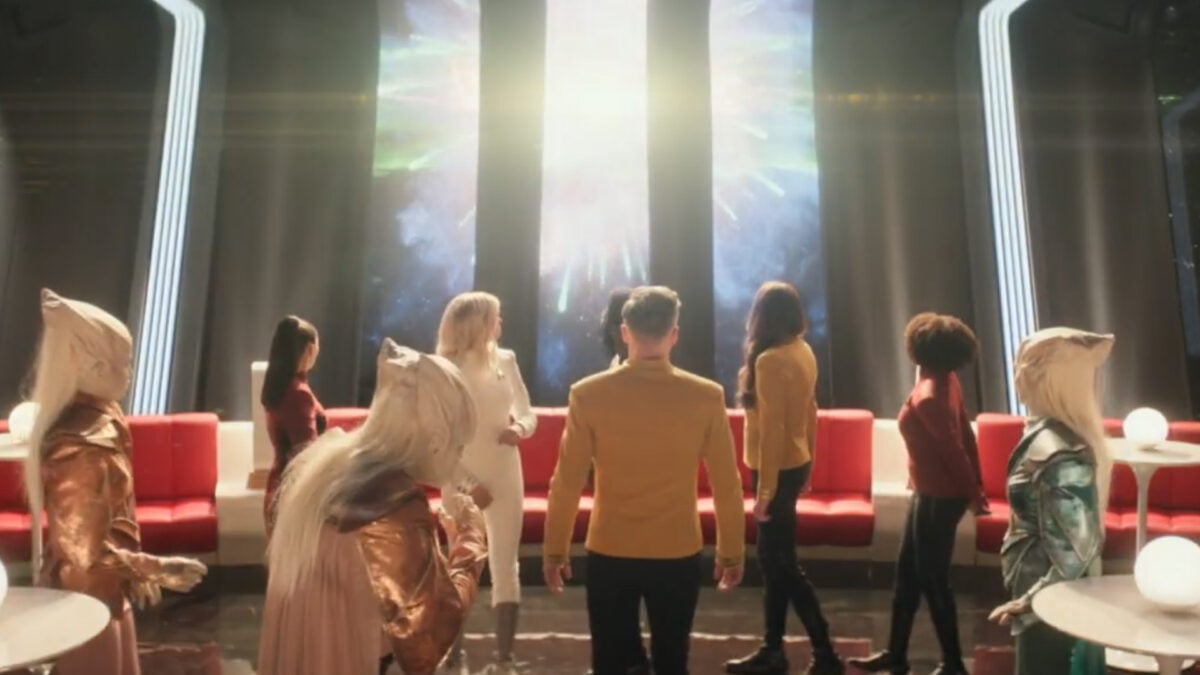


Since that Parnell is most recently known for Jerry in Rick and Morty, I feel like we’re missing out on “Star Trek: Jerry”
Picture it: Alpha Quadrant, 3070. Captain Jerry Smith’s is one of the few ships to survive The Burn.
Captain Jerry: I just kept maintaining course and speed at full impulse, and it just kept working.