… yeah, and it’s kinda weird circuits were involved, when we have a mad-science supply of liquid nitrogen. I would have assumed that was the mechanism for keeping anything extremely frozen for decades on end.
I would have assumed that was the mechanism for keeping anything extremely frozen for decades on end.
Boy you’d think, right? Gravity-powered liquid nitrogen just makes too much sense. No, we’ll make it so it won’t fail unless the circuit box gets opened!
That is a bit over my head (my degree is in CompSci), but the research samples only had a 3C degree margin for error (77 to 83C) so I am assuming they had a good reason for using the setup that they had. Or maybe they were forced to accept that setup due to financial limitations.
Either way, privatization was 100% at fault here. The university wanted to cut costs (avoid paying benefits) so they outsourced the cleaning job to a private company who hired the cheapest guy they could. The outsourced company didn’t understand or respect their research and the guy they hired obviously didn’t either.


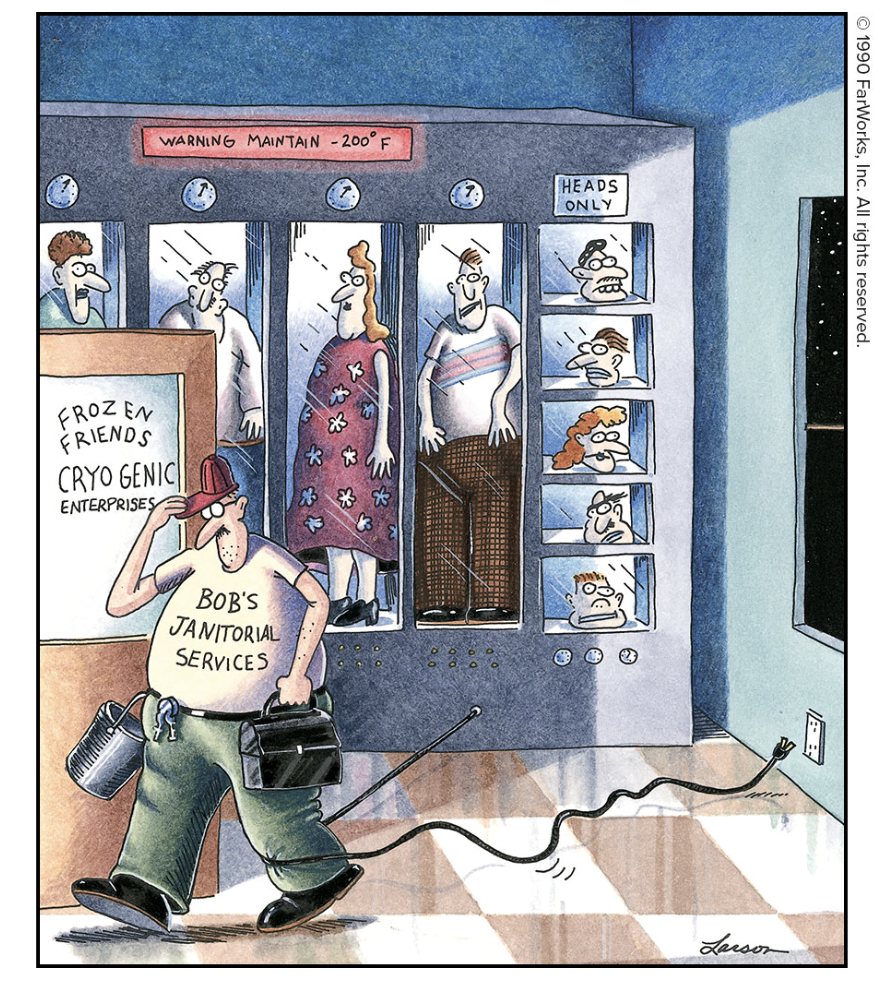
… yeah, and it’s kinda weird circuits were involved, when we have a mad-science supply of liquid nitrogen. I would have assumed that was the mechanism for keeping anything extremely frozen for decades on end.
Boy you’d think, right? Gravity-powered liquid nitrogen just makes too much sense. No, we’ll make it so it won’t fail unless the circuit box gets opened!
That is a bit over my head (my degree is in CompSci), but the research samples only had a 3C degree margin for error (77 to 83C) so I am assuming they had a good reason for using the setup that they had. Or maybe they were forced to accept that setup due to financial limitations.
Either way, privatization was 100% at fault here. The university wanted to cut costs (avoid paying benefits) so they outsourced the cleaning job to a private company who hired the cheapest guy they could. The outsourced company didn’t understand or respect their research and the guy they hired obviously didn’t either.