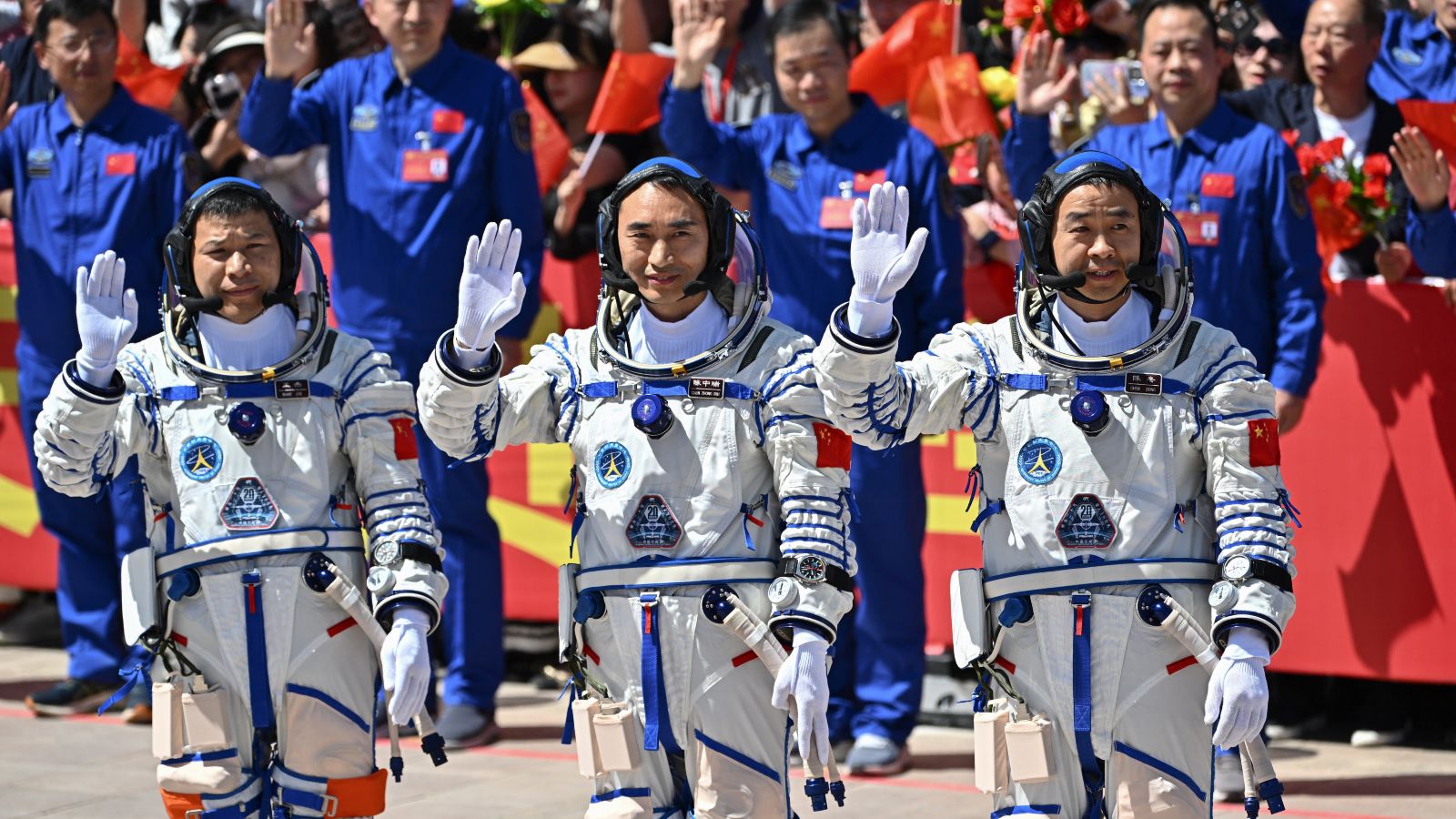
Three Chinese taikonauts — Wang Jie, Chen Zhongrui and Chen Dong — will be extending their stay aboard China's Tiangong space station after their return capsule was struck by a presumed piece of orbital debris on Wednesday.
My understanding is starlink won’t contribute to the kessler syndrome because they are in low Earth orbit. They routinely fall back down to Earth so they don’t contribute to much space junk
There are other potential issues with that, though. Just not space junk
In a statement released after the test, Indian Ministry of External Affairs said that the test was conducted at low altitude to ensure that the resulting debris would “decay and fall back onto the Earth within weeks”.[39][22]
According to Jonathan McDowell, an astrophysicist at Center for Astrophysics | Harvard & Smithsonian, some debris might persist for a year, but most should burn up in the atmosphere within several weeks.[40] Brian Weeden of Secure World Foundation agreed, but warned about the possibility of some fragments getting boosted to higher orbits.
Still created a debris cloud, but most of it didn’t last long.
Anti-satellite missile tests, especially ones involving kinetic kill vehicles as in this case, contribute to the formation of orbital space debris which can remain in orbit for many years and could interfere with future space activity (Kessler syndrome).[28] The 2007 Chinese ASAT test created the largest field of space debris in history, with more than 3,000 pieces of trackable size (golf ball size and larger) officially catalogued in the immediate aftermath, and an estimated 150,000 debris particles.[29][30][31] As of October 2016, a total of 3,438 pieces of debris had been detected, with 571 decayed and 2,867 still in orbit nine years after the incident.[32]
More than half of the tracked debris orbits the Earth with a mean altitude above 850 kilometres (530 mi), so they would likely remain in orbit for decades or centuries.[33] Based on 2009 and 2013 calculations of solar flux, the NASA Orbital Debris Program Office estimated that around 30% of the larger-than-10-centimeter (3.9 in) debris would still be in orbit in 2035.[34]
SpaceX have always been very careful to properly deorbit their used stages. Also, their satellites are in a very low orbit and designed to burn up after the end of their service life. The Chinese on the other hand regularly drop first stages on their own population. The later stages either stay in orbit or come down in an uncontrolled manner. The Chinese space program has overall been very careless about space debris so far. Plus they conducted an anti-satellite test that created a lot of debris that is still up there. They definitely need to be more diligent on these matters.


I feel like the country letting Musk blast space full of shit might also want to have a look
My understanding is starlink won’t contribute to the kessler syndrome because they are in low Earth orbit. They routinely fall back down to Earth so they don’t contribute to much space junk
There are other potential issues with that, though. Just not space junk
And it’s not like they couldn’t have done the anti-satellite test on something that was about to re-enter. India did that a while back.
https://en.wikipedia.org/wiki/Mission_Shakti
Still created a debris cloud, but most of it didn’t last long.
https://en.wikipedia.org/wiki/2007_Chinese_anti-satellite_missile_test
SpaceX have always been very careful to properly deorbit their used stages. Also, their satellites are in a very low orbit and designed to burn up after the end of their service life. The Chinese on the other hand regularly drop first stages on their own population. The later stages either stay in orbit or come down in an uncontrolled manner. The Chinese space program has overall been very careless about space debris so far. Plus they conducted an anti-satellite test that created a lot of debris that is still up there. They definitely need to be more diligent on these matters.